Step into the world of wireless charging technology where cords are a thing of the past and power delivery is as seamless as a breeze. Get ready to explore the wonders of this innovative tech that is changing the way we charge our devices!
Introduction to Wireless Charging Technology

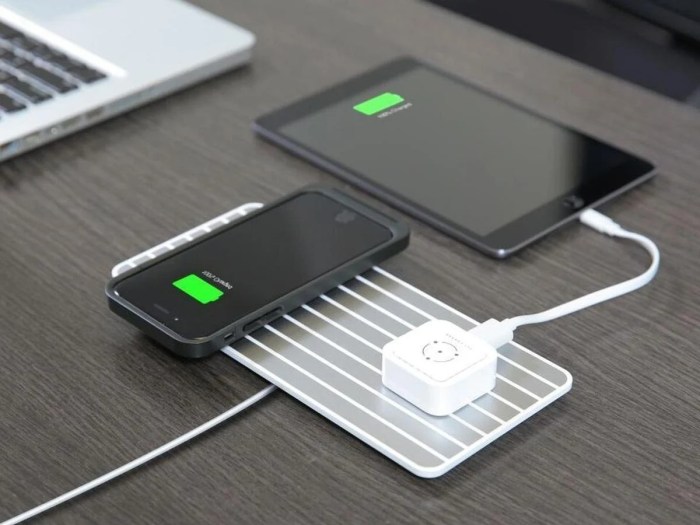
Wireless charging technology allows devices to charge without the need for physical cables or connectors. This technology uses electromagnetic fields to transfer power between a charging pad and a compatible device placed on top of it.
Advantages of Wireless Charging
- Convenience: Users can simply place their device on a charging pad without the hassle of dealing with cables.
- Durability: With no connectors to wear out, wireless charging can prolong the lifespan of devices.
- Flexibility: Devices can be charged at various locations without the need for multiple power outlets.
Wireless Charging Applications
- Smartphones: Many modern smartphones come with wireless charging capabilities, allowing users to charge their devices by simply placing them on a charging pad.
- Smartwatches: Wearable devices like smartwatches also utilize wireless charging technology for easy and convenient charging.
- Electric Vehicles: Wireless charging is being developed for electric vehicles, enabling them to charge without the need to physically plug in.
Types of Wireless Charging Technologies
Wireless charging technologies have evolved over the years, offering different methods to charge devices without the need for traditional wired connections. Let’s explore the various types of wireless charging technologies available in the market and understand how they work.
Inductive Wireless Charging
Inductive wireless charging is one of the most common methods used in devices like smartphones and electric toothbrushes. This technology relies on electromagnetic fields to transfer energy between the charging pad and the device. When the device is placed on the charging pad, the coils in both the pad and the device create a magnetic field, inducing a current to charge the device.
Resonant Wireless Charging
Resonant wireless charging is a more advanced form of wireless charging that allows for greater distance between the charging pad and the device. This technology uses resonant inductive coupling to transfer energy, enabling efficient charging even when the device is not in direct contact with the charging pad. It works by tuning the frequencies of the coils in the pad and the device to resonate and transfer power wirelessly.
Radio Frequency (RF) Wireless Charging
Radio frequency wireless charging is a cutting-edge technology that utilizes radio waves to transfer power to devices. This method is still in the early stages of development but shows promise for charging devices at longer distances compared to other wireless charging technologies. RF wireless charging works by converting radio frequency signals into direct current (DC) power to charge the device wirelessly.Each of these wireless charging technologies has its own set of advantages and limitations, catering to different use cases and preferences.
As technology continues to advance, we can expect more innovations and improvements in wireless charging methods, making it even more convenient and accessible for users worldwide.
Wireless Charging Standards
In the world of wireless charging technology, various standards have emerged to ensure interoperability and efficiency. These standards dictate how devices communicate and interact with charging pads, making it crucial for consumers to understand the differences between them.Standardization in wireless charging technology is essential to promote widespread adoption and ensure compatibility between devices from different manufacturers. Without a common standard, users would face limitations in charging their devices with various charging pads, leading to confusion and inconvenience.
Qi Standard
The Qi standard, developed by the Wireless Power Consortium, is the most widely adopted wireless charging standard in the market. It utilizes magnetic induction to transfer power between the charging pad and the device. Qi-enabled devices are compatible with a wide range of charging pads, making it a popular choice for smartphones, smartwatches, and other gadgets.
PMA Standard
The Power Matters Alliance (PMA) standard is another wireless charging technology that focuses on inductive charging. While not as prevalent as the Qi standard, PMA-enabled devices can still be found in some smartphones and public charging spots. However, compatibility with Qi devices may be limited, creating a divide in the market.
AirFuel Standard
The AirFuel Alliance promotes a more inclusive approach to wireless charging by supporting both inductive and resonant charging technologies. This standard aims to provide a unified solution for various charging needs, including powering up smartphones, laptops, and other electronics. AirFuel-compatible devices can work with a wider range of charging pads, offering more flexibility to users.Comparing these wireless charging standards reveals differences in compatibility and efficiency.
While Qi remains the dominant standard with broad device support, PMA and AirFuel cater to specific market segments. Understanding the nuances of each standard can help consumers make informed decisions when choosing wireless charging solutions for their devices.
Components of Wireless Charging Systems
Wireless charging systems consist of several key components that work together to enable the transfer of power without the need for physical connections. These components include transmitters, receivers, and coils, each playing a crucial role in the wireless charging process.
Transmitters
Transmitters are devices that generate electromagnetic fields, which are used to transfer power wirelessly to the receiver. These transmitters are typically connected to a power source and are responsible for converting electrical energy into electromagnetic energy that can be received by the compatible receiver.
- Transmitters are often equipped with advanced circuitry to regulate the power output and ensure efficient charging.
- Materials such as copper coils are commonly used in transmitters due to their high conductivity and durability.
Receivers
Receivers, also known as power receivers, are the components that receive the electromagnetic energy transmitted by the transmitter and convert it back into electrical energy to charge the device. Receivers are usually integrated into the devices being charged, such as smartphones or wearables.
- Receivers are designed to efficiently capture and convert the electromagnetic energy into usable power for the device.
- Materials like ferrite are often used in receivers for their magnetic properties that aid in energy conversion.
Coils
Coils are an essential part of both transmitters and receivers in wireless charging systems. These coils are responsible for creating magnetic fields that facilitate the transfer of power between the transmitter and receiver. The alignment and design of the coils play a crucial role in the efficiency of the wireless charging process.
- Copper coils are commonly used in both transmitters and receivers due to their high conductivity and ability to generate magnetic fields efficiently.
- Coils are often designed in specific configurations to optimize the coupling between the transmitter and receiver for maximum power transfer.
Future Trends in Wireless Charging
As technology continues to advance, the future of wireless charging holds exciting possibilities. Researchers and developers are exploring various trends that could shape the evolution of wireless charging technology in the coming years.
Advancements in Range and Speed
One of the key areas of focus in wireless charging technology is improving the range and speed of charging. Currently, most wireless charging systems require devices to be placed in close proximity to charging pads or stations. However, researchers are working on developing technologies that can enable charging over longer distances, eliminating the need for direct contact. This could revolutionize the way we charge our devices, making it more convenient and efficient.
Evolution of Wireless Charging Technology
Looking ahead, we can expect to see significant advancements in the efficiency and effectiveness of wireless charging systems. This could include faster charging speeds, enhanced compatibility with a wider range of devices, and increased energy efficiency. As the demand for wireless charging continues to grow, manufacturers are likely to invest more resources in research and development, leading to innovative solutions and improved user experiences.
Wireless Charging in Electronics and Electrical Industry
Wireless charging technology has revolutionized the electronics and electrical industry by providing a convenient and efficient way to power devices without the need for traditional wired connections. This advancement has had a significant impact on how electronic devices are designed and used in various applications.
Significance of Wireless Charging in Electronics
- Wireless charging eliminates the hassle of dealing with tangled cords and allows for a clutter-free charging experience.
- It enables seamless integration of charging technology into the design of electronic devices, leading to sleeker and more user-friendly products.
- With the rise of IoT devices and wearables, wireless charging has become essential for powering these gadgets without compromising on their compact and portable designs.
Influence on Electronic Device Design
- Wireless charging has influenced the design of smartphones, smartwatches, and other gadgets by allowing for thinner and more aesthetically pleasing form factors.
- Manufacturers are now incorporating wireless charging pads into furniture, vehicles, and public spaces to enable convenient charging on the go.
- This technology has opened up new possibilities for device manufacturers to create innovative products that prioritize user convenience and mobility.
Examples of Electronic Devices with Wireless Charging
- Popular smartphones like the iPhone 12, Samsung Galaxy S21, and Google Pixel 5 feature wireless charging capabilities, providing users with a cable-free charging experience.
- Wireless earbuds such as Apple AirPods, Samsung Galaxy Buds, and Google Pixel Buds also come with wireless charging cases for added convenience.
- Electric toothbrushes, smartwatches, and even electric vehicles are now equipped with wireless charging technology, showcasing its versatility across different industries.
Summary
As we wrap up our journey through the realm of wireless charging technology, one thing is clear – the future is wireless, convenient, and full of endless possibilities. Embrace the evolution and stay charged up!
FAQ
How does wireless charging work?
Wireless charging uses electromagnetic fields to transfer power from a transmitter to a receiver, eliminating the need for physical cables.
What are the advantages of wireless charging?
Wireless charging offers convenience, eliminates the wear and tear of charging ports, and reduces clutter from multiple cables.
Are all devices compatible with wireless charging?
No, not all devices are compatible. Devices need to have built-in wireless charging capabilities or use accessories like wireless charging cases.
What are the popular wireless charging standards?
Popular standards include Qi, PMA, and AirFuel, each with its own specifications and compatibility requirements.
Can wireless charging be as fast as wired charging?
While wireless charging speeds have improved, they are generally slower than wired charging due to energy transfer efficiency.